Best Sports Betting Movies of All Time
Fri, Jul 31, 2026 · Jones
Sports betting has inspired some of Hollywood's most compelling dramas — stories about risk, obsession, redemption, and the fine line between confidence and self-destruction. Unlike poker or casino movies, which usually center on card rooms and blackjack tables, sports betting movies are built around a different kind of tension: picking winners, beating the spread, and living with the consequences when a bet goes wrong.
Here's a deep dive into the best sports betting movies ever made, what each one gets right about the business, and where you can watch the trailer for yourself.
Two for the Money (2005)
Al Pacino and Matthew McConaughey headline this drama, loosely based on real-life sports handicapper Stu Feiner. McConaughey plays Brandon Lang, a former college football star whose career ends with a knee injury, leaving him to rebuild his life as a sports handicapper — someone who sells betting picks to clients for a fee. His uncanny ability to predict winners catches the attention of Walter Abrams (Pacino), the charismatic and ruthless head of one of the country's largest sports consulting firms.
What makes this film stand out is that it's one of the only mainstream movies to deal directly with the sports handicapping industry rather than casino or card gambling. It dives into how touts operate, how confidence (real or manufactured) is sold to clients, and how quickly ego and pressure can turn a hot streak into a personal and financial collapse. For anyone interested in the business side of sports betting — not just the wagering itself — this is essential viewing.
White Men Can't Jump (1992)
Woody Harrelson and Wesley Snipes star as Billy Hoyle and Sidney Deane, two streetball hustlers who team up to con unsuspecting players out of money on pickup basketball courts across Los Angeles. Billy, a white player who's constantly underestimated because of his appearance, and Sidney, who talks a big game and knows how to read a mark, use psychology as much as basketball skill to set up and win their bets.
While it's played largely for comedy, the film's portrayal of hustling has real substance to it — reading opponents, managing overconfidence (your own and theirs), and knowing when the odds have shifted against you are all central to the plot. It's a lighter watch than most entries on this list, but the underlying lessons about risk, ego, and knowing your edge translate directly to sports betting strategy.
The Color of Money (1986)
Martin Scorsese directs this sequel to 1961's The Hustler, with Paul Newman reprising his Academy Award-winning role as "Fast Eddie" Felson, a former pool hustler who takes a talented but reckless young player (Tom Cruise) under his wing. The pair travel the pool hall circuit, hustling games and building toward a high-stakes nine-ball tournament in Atlantic City.
Wagering drives nearly every scene — Eddie's whole philosophy revolves around managing risk, reading opponents, and knowing exactly how much to bet based on the size of the edge. The mentor-student dynamic between Newman and Cruise gives the film emotional weight beyond just the hustling, and Newman's performance remains one of the most acclaimed depictions of a professional gambler on screen.
Eight Men Out (1988)
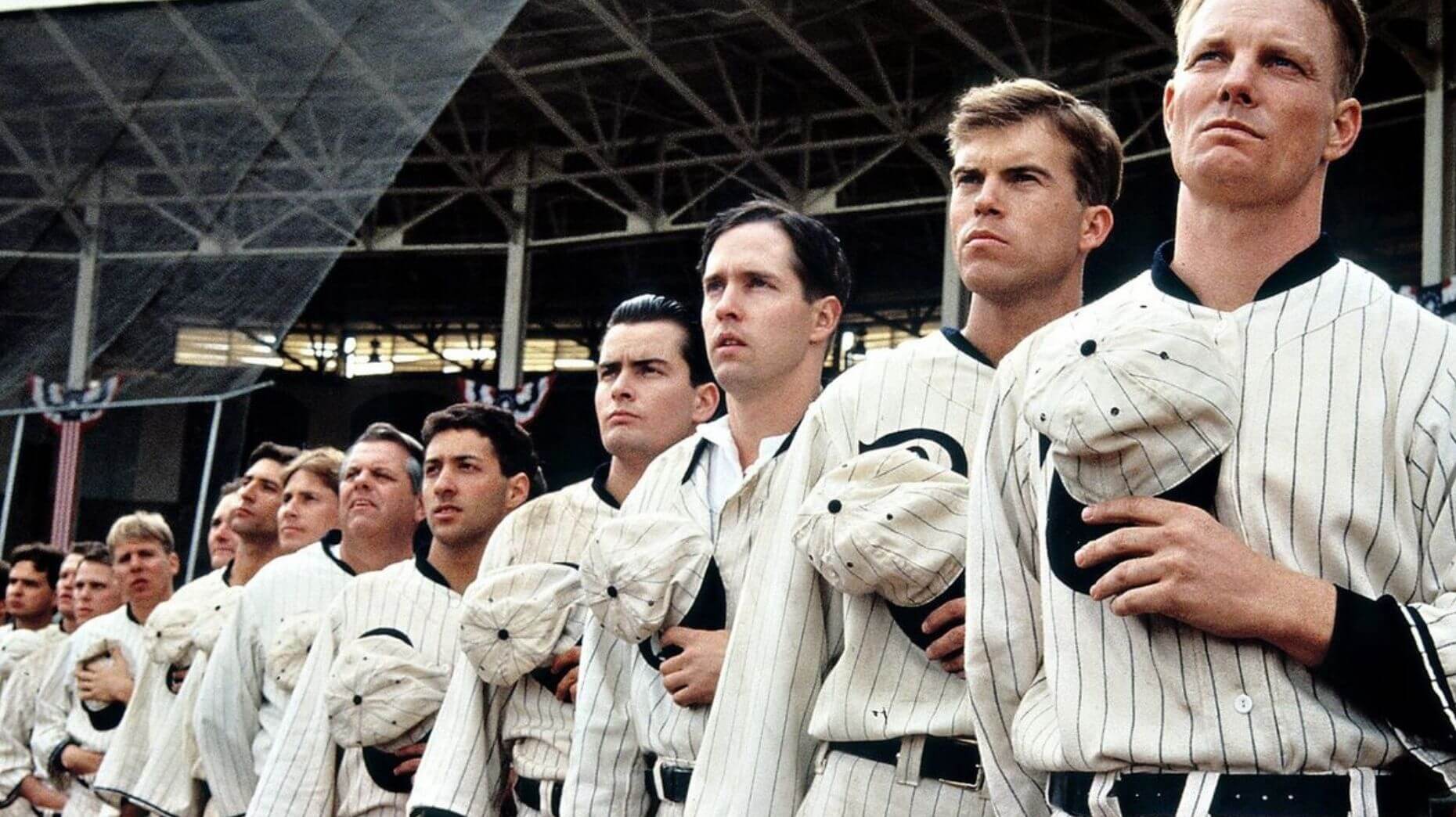
Based on Eliot Asinof's book of the same name, this historical drama dramatizes one of the most infamous scandals in sports history: the 1919 Chicago White Sox players who conspired with gamblers to intentionally lose the World Series in exchange for money. Featuring an ensemble cast including John Cusack, Charlie Sheen, and David Strathairn, the film explores the underpaid players' motivations, the gamblers who manipulated them, and the fallout that permanently damaged the sport's integrity.
This is arguably the most important film on this list for anyone in the sports betting industry today, since it depicts exactly the kind of corruption that modern licensing, regulation, and integrity monitoring exist to prevent. It's a sobering reminder of why legal, transparent sportsbooks matter — and how much the industry has changed in the century since.
Lay the Favorite (2012)
Based on Beth Raymer's memoir of the same name, this comedy-drama follows Beth (Rebecca Hall), a free-spirited young woman who leaves her job as a Florida stripper to become an assistant to Dink (Bruce Willis), a professional Las Vegas sports bettor. Beth turns out to have a natural talent for handicapping, and the film follows her journey through both the legal and illegal corners of the sports gambling world.
Unlike most entries on this list, Lay the Favorite is told from a woman's perspective and focuses less on addiction or crime and more on the day-to-day mechanics and characters of the professional betting scene — the "sharps," the runners, and the operators who make up the ecosystem around a bet.
Uncut Gems (2019)
Adam Sandler delivers a career-best, anxiety-inducing performance as Howard Ratner, a New York City jeweler whose compulsive sports betting spirals further out of control with every scene. Directed by the Safdie Brothers, the film is shot with a relentless, propulsive energy that puts the audience directly inside Howard's escalating panic as his bets, debts, and personal relationships all collapse at once.
Uncut Gems is widely regarded as one of the most realistic and uncomfortable on-screen depictions of gambling addiction, deliberately avoiding the glamour that many betting movies lean into. It doesn't offer much in the way of strategy lessons, but it's an unflinching look at what happens when betting stops being a calculated risk and becomes a compulsion.
The Gambler (2014)
Mark Wahlberg stars as Jim Bennett, a literature professor and English department lecturer with a self-destructive gambling habit that leads him to borrow from his wealthy mother and, eventually, a dangerous loan shark played by Michael Kenneth Williams. As his debts mount, Bennett plays multiple sides against each other in an increasingly desperate attempt to dig himself out.
A remake of the 1974 film of the same name (itself inspired by Dostoevsky's novella), this version leans into Bennett's nihilism and self-sabotage rather than the thrill of winning. It's one of the darker, more psychologically driven films on this list, offering a useful counterbalance to the movies that treat betting as pure entertainment.
Hardball (2001)
Keanu Reeves plays Conor O'Neill, an aimless man whose gambling debts have spiraled out of control. Desperate for money, he agrees to coach a Little League baseball team from a Chicago housing project in exchange for a weekly stipend from a friend. What starts as a reluctant obligation turns into a story about redemption, as Conor's relationship with the kids on the team forces him to confront the consequences of his gambling habit.
Unlike the other films on this list, Hardball isn't really about the mechanics of betting — gambling functions mainly as the backstory that sets the plot in motion. Still, it's a notable example of how a gambling addiction storyline can be used to anchor a broader story about accountability and personal growth.
Several of these films explore gambling addiction and its real consequences. If betting stops feeling fun or starts affecting your finances, relationships, or well-being, it may be worth setting limits or reaching out for support.